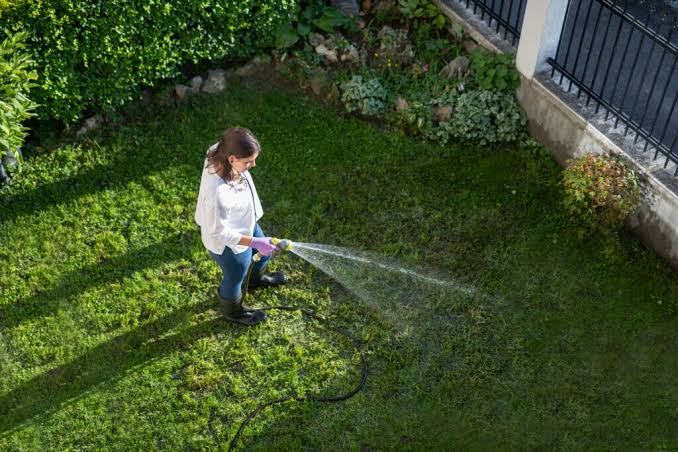
Freshly installed sod can transform a bare yard into a green lawn almost immediately, but keeping it healthy requires careful attention during the first few weeks. New sod does not yet have an established root system connecting it to the soil underneath. Without enough moisture, the grass can dry out, turn brown and struggle to take hold. Applying too much fertilizer too early can create a different problem by encouraging growth before the roots are ready to absorb nutrients.
The most important steps are to water consistently, check soil moisture rather than follow a rigid schedule, and fertilize only when the grass is ready. Understanding the best time to water sod and choosing the right fertilizer can make establishment easier and help create a stronger lawn.
When Is the Best Time to Water New Sod?
The best time to water an established lawn is generally early in the morning, before temperatures rise. Morning irrigation reduces water loss from evaporation and gives grass time to dry during the day.
However, newly installed sod has a different priority. During establishment, keeping the grass and the soil beneath it moist is more important than following a particular watering hour. If the sod is laid during hot weather, it may need additional watering during the day to prevent drying.
For most homeowners, an early-morning watering schedule is a useful starting point, with additional short sessions when heat, wind or dry soil conditions require them.
Best Times to Water Sod During the Establishment Period
The watering schedule should change as the roots begin growing into the ground. A practical approach is to divide the process into three stages.
| Establishment stage | General watering approach | Main objective |
| First 7 days | Water immediately after installation and keep sod consistently moist, often with daily or multiple short sessions | Prevent the grass and underlying soil from drying |
| Days 8 to 14 | Continue regular watering, adjusting according to root development and weather | Encourage roots to connect with the soil |
| Weeks 3 to 4 | Gradually reduce frequency and water more deeply | Encourage deeper root growth |
These timings are guidelines, not a fixed prescription. Hot, windy conditions and sandy soil may require more frequent watering, while rainfall, cooler weather and heavier soils can reduce the need.
University extension guidance commonly recommends checking moisture beneath the sod rather than relying only on the appearance of the grass. Lift a corner of a few pieces to see whether the soil underneath is moist. The sod should not be sitting in muddy or permanently saturated ground.
How Much Water Does New Sod Need?
New sod needs enough water to moisten the grass layer and the soil directly beneath it. During the first irrigation, water thoroughly so moisture reaches both layers.
The amount required depends on the thickness of the sod, soil type, sprinkler output and weather. Sandy soil drains quickly, while clay soil holds water longer. Applying the same amount to every lawn can therefore produce very different results.
A few practical checks can help:
- Lift a corner of the sod to inspect the soil underneath.
- Check several areas, including edges and sunny sections.
- Watch for bluish-gray grass or curling blades, which can indicate moisture stress.
- Avoid puddles, runoff and constantly soggy soil.
- Make sure sprinkler coverage reaches the entire lawn rather than only the middle.
Mississippi State University Extension recommends using soil moisture and the appearance of the turf to guide irrigation, rather than relying on a universal watering duration.
How to Water New Sod Correctly
The equipment and watering method matter almost as much as timing. A sprinkler that covers the lawn evenly is often easier to manage than watering a large area with a hose.
1. Water immediately after installation
Do not wait until the entire lawn has been laid if installation is happening in sections. Water completed sections while the remaining sod is being installed. This reduces the risk of the exposed grass drying out.
2. Use even sprinkler coverage
Choose a sprinkler that suits the size and shape of the lawn. Move it when necessary to prevent dry patches. Pay particular attention to corners, edges and areas beside driveways or buildings.
3. Check moisture beneath the grass
The surface can look green while the soil underneath is dry. Lift small corners of sod in different locations to confirm that water is reaching the root zone.
4. Reduce watering gradually
Once the sod resists gentle lifting and roots begin entering the soil, start reducing watering frequency. Apply water more deeply rather than continuing frequent shallow sessions.
5. Adjust for rainfall and weather
Skip or reduce irrigation when rainfall has already supplied enough moisture. Increase monitoring during hot, dry or windy periods.
What Is the Best Fertilizer for New Sod?
The best fertilizer for new sod depends on the soil’s existing nutrient levels, grass variety and the fertilizer applied by the sod producer before harvest. There is no single product that is suitable for every installation.
A starter fertilizer is often associated with new lawn establishment because it can supply nutrients that support early growth. Many starter products contain nitrogen, phosphorus and potassium, commonly displayed as an N-P-K ratio on the packaging.
For example, an 18-24-12 fertilizer contains 18% nitrogen, 24% phosphate and 12% potash by weight. Its relatively higher phosphorus content is intended for situations where that nutrient is needed for establishment.
However, phosphorus is not automatically necessary for every new lawn. If a soil test shows that phosphorus levels are already sufficient, adding more can be wasteful and may contribute to water pollution. A soil test is the most reliable way to determine whether a phosphorus-containing starter fertilizer is appropriate.
Features to Look for in a Starter Fertilizer
When comparing products, consider these characteristics:
- Appropriate N-P-K ratio: Choose a formulation that matches the soil test and grass requirements.
- Controlled-release nitrogen: Slow-release nitrogen can provide nutrients over a longer period instead of producing a sudden growth surge.
- Suitable application rate: Follow the product label and local lawn recommendations rather than applying extra fertilizer.
- Grass compatibility: Confirm that the product is suitable for the specific turfgrass variety.
- Clear instructions: The label should explain application rates, timing and watering requirements.
A starter fertilizer should be selected based on actual nutrient needs, not simply because the packaging says it is designed for new lawns.
When Should You Apply the Best New Sod Fertilizer?
One of the most common mistakes is fertilizing immediately after installation without checking whether the sod needs additional nutrients.
Commercial sod is usually fertilized during production. It may therefore contain enough nutrients to support the grass during its initial establishment period.
Many university extension recommendations suggest waiting around four weeks before applying additional fertilizer. Some recommend waiting 30 to 60 days, depending on grass type, local conditions and the previous fertilizer treatment.
Before applying anything, ask the sod supplier when the grass was last fertilized and check the soil test results. If the lawn is establishing normally, there may be no reason to rush.
Once the sod has rooted, choose a suitable fertilizer and apply it at the recommended rate. Water according to the product instructions, taking care not to wash fertilizer into drains or paved areas.
Best Fertilizer for New Zoysia Sod
Zoysia is a warm-season grass valued for its dense growth and ability to form a relatively durable lawn. It generally establishes best during warm growing conditions, but its fertilizer requirements should still be based on soil conditions and the variety being grown.
The best fertilizer for new Zoysia sod is not necessarily the product with the highest nitrogen or phosphorus content. A balanced approach is more useful.
Consider these points when choosing fertilizer for new Zoysia:
- Test the soil before selecting a fertilizer.
- Avoid unnecessary phosphorus if the soil already contains enough.
- Allow the sod to begin rooting before applying additional nitrogen.
- Choose a product labeled for Zoysia or suitable warm-season turfgrass.
- Apply fertilizer while the grass is actively growing, following local recommendations.
- Avoid excessive nitrogen, which can encourage rapid top growth without providing a corresponding improvement in root establishment.
University of Florida guidance for Zoysiagrass also emphasizes keeping newly installed sod moist until roots hold it firmly to the soil, usually over a period of approximately two to three weeks under suitable conditions.
Common Watering and Fertilizing Mistakes to Avoid
Even good-quality sod can struggle when basic care is inconsistent. Some common mistakes are easy to prevent.
Watering only when the grass looks dry: By the time new sod shows obvious stress, it may already have lost too much moisture. Check the soil underneath regularly.
Keeping the lawn constantly saturated: Excessive water can reduce oxygen in the soil and interfere with root development. Moist soil is the goal, not muddy ground.
Using a fixed sprinkler schedule in every season: Water requirements change with temperature, rainfall, wind and soil type. Adjust the schedule rather than relying on the same number of minutes every day.
Applying fertilizer too early: New sod has a limited root system and may not absorb nutrients efficiently. Check the supplier’s fertilizer history and wait until the grass is ready.
Using too much fertilizer: Excessive nutrients can damage grass, encourage unnecessary growth and contribute to runoff. Always follow the label and soil test recommendations.
Final Thoughts
Successful sod establishment depends on balancing moisture and nutrients. The best times to water sod are generally in the early morning, but newly installed grass may need additional short watering sessions during hot or windy weather. As roots develop, gradually move toward deeper and less frequent irrigation.
Choosing the best starter fertilizer for sod requires a similar level of care. Check the soil, consider the fertilizer already applied by the sod producer and avoid unnecessary applications during the first few weeks. For Zoysia and other grass varieties, use a fertilizer suited to the turf and its actual nutrient requirements.
Consistent moisture, careful monitoring and sensible fertilization give new sod the conditions it needs to establish a healthy root system and develop into a durable lawn.
Leave a Reply