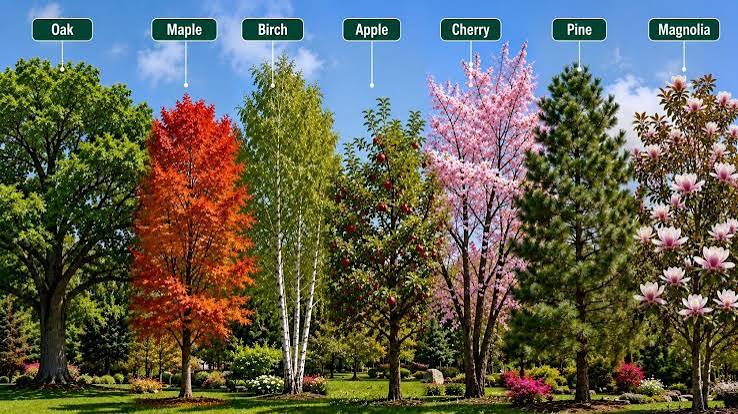
Pruning trees at the right time of year can improve their structure, manage unwanted growth and remove branches that could become safety hazards. However, not every tree responds to pruning in the same way. Maple trees can release sap when cut during late winter, oak trees require special attention because of oak wilt disease, and pine trees are often trimmed by shortening their new seasonal growth.
So, when is the best time of year to trim trees? For many deciduous shade trees, late winter or early spring, before new growth begins, is a suitable period. However, the ideal timing depends on the tree species, local climate and reason for pruning.
When Is the Best Time of Year to Trim Trees?
For most deciduous trees, late winter is a practical time for routine pruning. Trees are dormant, branches are easier to see without leaves, and homeowners can identify crossing, damaged or poorly positioned limbs.
In colder regions, pruning is generally best scheduled after the harshest winter weather has passed but before buds begin opening. This gives homeowners a clear view of the tree while avoiding some of the risks associated with pruning during active spring growth.
However, there are exceptions. Some trees are better pruned during summer, while others have specific disease-related restrictions. Dead, broken or hazardous branches may also need attention regardless of the season.
The following guidelines explain the best timing for several common tree types.
When Is the Best Time to Prune a Maple Tree?
Maple trees are known for their seasonal sap flow. If branches are cut during late winter or early spring, some maple varieties may release noticeable amounts of sap from pruning wounds.
This process is commonly called bleeding. Although the sight of sap dripping from a cut can be concerning, it generally does not cause significant harm to a healthy, established maple.
If you want to avoid excessive sap flow, summer is often a good time to prune maple trees. Wait until the leaves have fully developed and the spring growth period has passed. Mid- to late summer is commonly recommended for routine shaping and branch removal.
A few practical considerations include:
- Remove dead, damaged or diseased branches whenever necessary.
- Schedule major shaping work after spring leaf development.
- Avoid heavy pruning during periods of extreme heat or drought.
- Do not remove large portions of the canopy simply to control tree height.
If sap bleeding is not a concern, dormant-season pruning can also be appropriate. The choice often comes down to the tree’s condition and the homeowner’s preference.
When Is the Best Time to Prune Oak Trees?
Oak trees require more careful timing because of oak wilt, a serious fungal disease that can spread through certain insects attracted to fresh wounds on oak trees.
In areas where oak wilt is a concern, pruning during the warmer months can increase the risk of infection. For this reason, winter dormancy is generally the safest period for routine oak pruning.
A practical recommendation is to schedule oak maintenance between late fall and early spring, with winter often preferred. Local guidance should determine the exact dates because disease activity and regional recommendations vary.
When pruning an oak tree:
- Avoid routine pruning during the growing season when oak wilt transmission is a concern.
- Remove storm-damaged or dangerous branches when necessary.
- Use clean, sharp pruning equipment.
- Have large or potentially hazardous limbs assessed by a qualified arborist.
- Check local extension guidance for oak wilt precautions.
If a branch breaks during a storm, safety takes priority. Do not leave a dangerous limb in place simply because the timing is not ideal. Contact a professional if the damage involves large branches or the main trunk.
Best Time to Trim Pine Trees
Pine trees have a different growth pattern from most deciduous trees. They produce new seasonal shoots, commonly called candles, which extend before their needles fully develop.
The best time to trim pine trees for controlling size or encouraging a denser appearance is generally during late spring or early summer, when the new candles are still developing.
Rather than cutting through mature branches, selective pruning can shorten the current season’s new growth. The exact timing varies by pine species and local growing conditions.
Keep these points in mind:
- Trim new candles while they are still soft and before they have fully extended.
- Avoid cutting deeply into older, bare wood because many pines do not produce new shoots from old branches.
- Remove dead or broken branches when necessary.
- Avoid topping pine trees to control their height.
- Check the species-specific requirements before making substantial cuts.
Many established pine trees need very little pruning. Removing dead or damaged branches and addressing occasional structural problems is often sufficient.
Best Time to Prune Bradford Pear Trees
Bradford pear trees are ornamental trees that produce white spring flowers. Like other trees in the rose family, pears can be vulnerable to fire blight, a bacterial disease that affects branches and shoots.
For routine structural pruning, late winter or early spring before active growth is generally a suitable period. University of New Hampshire Extension specifically identifies ornamental pears as an exception to the usual spring-flowering tree pruning rule, recommending early spring to reduce the likelihood of fire blight transmission.
The best time to prune Bradford pear trees is therefore generally during the dormant period, before new growth begins.
Pruning can help remove weak, damaged or poorly positioned branches. Bradford pears are also known for narrow branch angles that can become weak as the canopy grows, making structural assessment important.
However, avoid making unnecessary large cuts. If a mature tree has major splitting or structural weaknesses, a professional arborist should assess it.
It is also worth considering that Bradford pear is a cultivar of Callery pear, an invasive tree in many parts of the United States. Homeowners replacing an aging Bradford pear may want to consider a suitable native or non-invasive alternative.
Best Season to Prune Trees in Rochester, New Hampshire
For homeowners searching for the best season to prune trees in Rochester, New Hampshire, late winter and early spring are useful starting points for many deciduous trees.
New Hampshire’s cold winters make it important to consider both tree dormancy and the possibility of severe freezing temperatures. University of New Hampshire Extension advises leaving routine finishing cuts until late winter or early spring, close to the beginning of active growth. Its guidance also identifies early spring as an appropriate time for pruning ornamental pears to reduce fire blight concerns.
A general seasonal guide for Rochester-area homeowners looks like this:
| Tree type | Recommended pruning period |
| Maple | Mid- to late summer to reduce sap bleeding |
| Oak | Winter dormancy, following local oak wilt guidance |
| Pine | Late spring to early summer for candle pruning |
| Bradford pear | Late winter or early spring |
| Most deciduous shade trees | Late winter or early spring |
| Dead or broken branches | As needed throughout the year |
These are general guidelines rather than fixed dates. The exact window depends on the tree species, weather conditions and the purpose of pruning.
When Is the Best Time to Cut Back Trees?
The best time to cut back trees depends on whether you are removing damaged branches, shaping the canopy or controlling unwanted growth.
For routine structural pruning, late winter is often a good choice for deciduous trees. It allows homeowners to see the branch arrangement clearly and make selective cuts before spring growth begins.
Summer pruning can be useful when the goal is to slow vigorous growth or manage the size of certain established trees. Maple trees, for example, are often pruned after their spring growth has finished.
Dead, diseased and broken branches are different. They can usually be removed as soon as they are identified, provided the work can be completed safely.
One important rule is to avoid removing too much live growth at once. A common guideline is to remove no more than about one-quarter of a mature tree’s living canopy in a single year, although the appropriate amount varies with the tree’s condition and species. Some trees may tolerate less.
Tree Pruning Mistakes Homeowners Should Avoid
Even when the timing is correct, poor pruning technique can damage a tree.
Topping the tree: Cutting the main trunk or major branches back indiscriminately can create weak regrowth and long-term structural problems.
Making flush cuts: Cutting too close to the trunk removes the branch collar, which is important for the tree’s natural wound response. Make the final cut just outside this area.
Leaving long stubs: Branch stubs can interfere with normal wound closure and may become entry points for decay.
Removing too much foliage: Heavy pruning reduces the tree’s ability to produce and store energy. Work gradually rather than removing large amounts of healthy growth at once.
Ignoring utility lines: Never attempt to prune branches near electrical wires. Contact the utility provider or a qualified tree-care professional.
For large branches, mature trees and work that requires climbing or chainsaws, hiring a qualified arborist is generally the safer option.
Final Thoughts
The best time to prune trees depends on the species and the purpose of the work. Late winter or early spring is suitable for many deciduous trees, while maple trees are often pruned in summer to reduce sap bleeding. Oak trees are best pruned during dormancy where oak wilt is a concern, and pine trees are commonly trimmed by shortening their developing spring candles.
For homeowners in Rochester, New Hampshire, local weather and University of New Hampshire Extension recommendations provide useful guidance when planning seasonal maintenance.
Rather than following one schedule for every tree, identify the species, inspect its condition and choose the appropriate pruning window. Proper timing combined with careful cutting can help maintain healthy growth, improve tree structure and reduce the risk of avoidable damage.
Leave a Reply