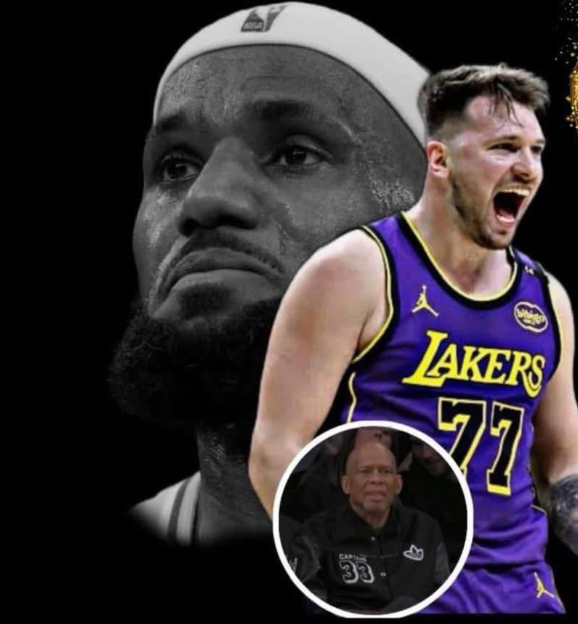
For years, Los Angeles Lakers fans have prided themselves on loyalty, legacy, and a certain basketball identity — one defined by legends like Magic Johnson, Kobe Bryant, and Kareem Abdul-Jabbar. But for many diehard Lakers fans, LeBron James has never truly belonged in that lineage. Despite bringing a championship to L.A. in 2020, the sentiment from some corners of the fanbase remains brutally clear: they can’t wait for LeBron to leave.
The frustration isn’t about his talent — no one questions that LeBron James is one of the greatest to ever play the game. But in the eyes of traditional Lakers fans, he represents something different — something manufactured rather than homegrown. When LeBron arrived in 2018, it wasn’t through the Lakers’ draft or years of loyalty; it was through free agency, with cameras, hype, and a narrative that felt more about LeBron than the Lakers.
For true Lakers loyalists, this was never about numbers. It was about soul. Kobe Bryant, drafted as a teenager, bled purple and gold for two decades. He lived through injuries, losses, and rebuilding years — and never ran from the challenge. In contrast, many fans see LeBron as a superstar who goes where the situation suits him, switching teams when convenient and crafting his own story rather than earning it the Lakers way.
Social media has become the main battleground. On platforms like X (formerly Twitter), Lakers purists openly post messages like, “We’re not a LeBron franchise — we’re a Kobe franchise.” Another viral comment read, “LeBron brought a bubble ring, but Kobe brought identity. That’s the difference.”
Even Lakers legends have been cautious with their praise. Magic Johnson, while respectful of LeBron’s greatness, has never fully compared him to Kobe or Kareem. It’s as if the organization itself has maintained an unspoken distance — acknowledging LeBron’s presence, but not fully embracing him as part of the family.
Then there’s the issue of control. Since joining the Lakers, LeBron has reportedly had major influence over roster decisions, coaching changes, and player acquisitions. Critics say this turned the Lakers from a proud franchise into a “LeBron project.” The failed experiment with Russell Westbrook, for instance, still leaves a sour taste — and many fans blame LeBron for pushing that move.
The 2020 “bubble championship” — while a legitimate title — didn’t help much in the court of public opinion. Many traditional fans dismiss it as a fluke, played in isolation without the crowd, the pressure, or the energy of the Staples Center. “That wasn’t Lakers basketball,” one fan commented. “That was LeBron basketball — sterile, controlled, and forgettable.”
Now, as LeBron nears the end of his career, the division within the fanbase is louder than ever. Younger fans who grew up idolizing him see him as the ultimate professional — a man who came, delivered a ring, and defied age. But older fans, the ones who lived through Showtime and the Kobe era, see his presence as temporary, transactional, and ultimately unworthy of the Lakers’ sacred legacy.
When LeBron finally does leave, there will be mixed emotions. Some will celebrate his contributions — four years of playoff runs, a title, and countless highlights. But others will simply breathe a sigh of relief, hoping to restore what they feel was lost: authenticity, identity, and the true Lakers spirit.
Because in the hearts of many lifelong fans, LeBron James was never really one of them. He was a visitor — a superstar who passed through, collected his accolades, and left behind a fanbase still divided over whether his era was a blessing… or a burden.