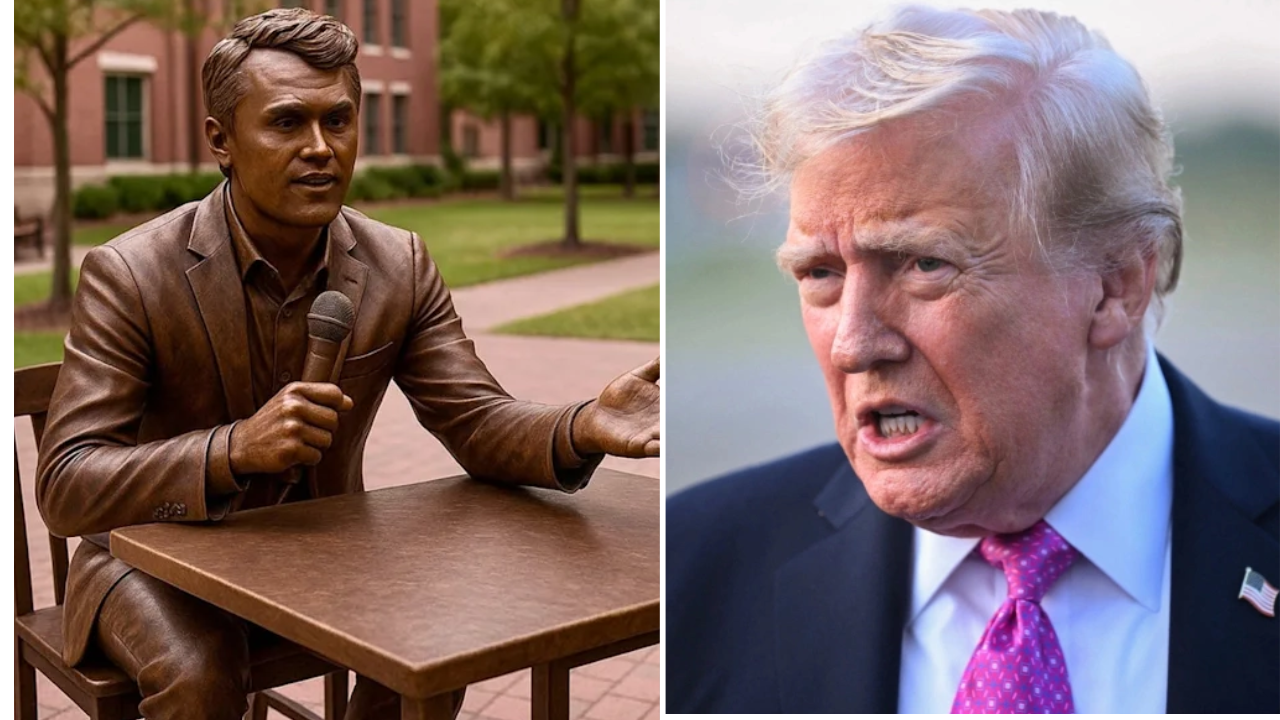
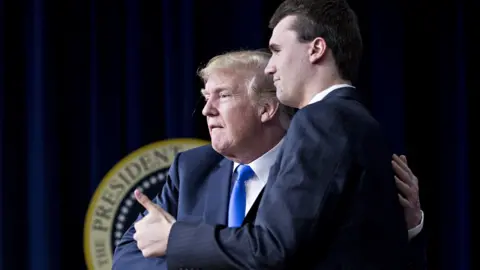
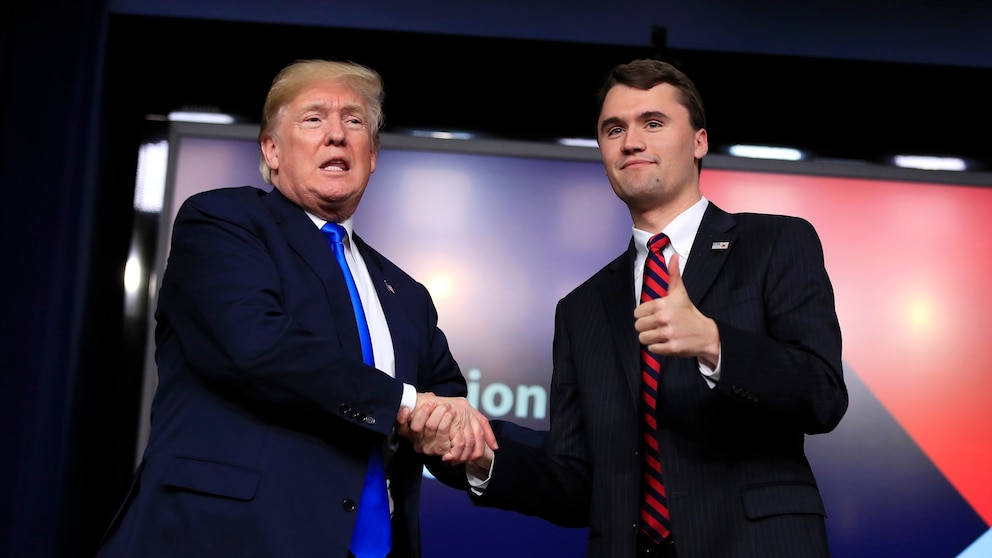
Today, the US political public was once again stirred up after CNN announced that former President Donald Trump had directly asked New College of Florida to erect a statue of Charlie Kirk – one of the prominent conservative figures and founder of the organization Turning Point USA. According to Mr. Trump, this monument is not only a personal honor for Kirk but also a symbol of “the relentless fight to protect and maintain the freedom of speech of the American people.”

The message that Mr. Trump wants to send is quite clear: in the context of the increasingly fierce debates about information censorship, social media control and political polarization, erecting a statue of Kirk is seen as a symbol against “forced silence.” In Mr. Trump’s view, freedom of speech in the US is seriously threatened, and honoring a figure like Kirk is a way to remind the American people that they must continue to “fight to not have their voices stifled.”
However, the problem does not stop there. According to sources, Mr. Trump also “forced” the New College leadership to quickly approve, considering this a priority task in the school’s development orientation. This action caused a lot of controversy. Some people think that Mr. Trump has interfered too deeply in the independent operation of an educational institution. Forcing a public university to erect a statue of a figure with a clear political color can lead to fierce opposition from the academic community, which always emphasizes neutrality in the educational environment.
Trump supporters, especially those with conservative ideology, see this as a “historic” step. They believe that Charlie Kirk deserves to be honored for spending many years fighting for conservative values and freedom of speech. Some also compare the future statue of Kirk to famous political and social monuments of the past, considering it a symbol of a new generation that dares to speak out in the midst of the turbulent American political current.
But does the statue truly represent freedom of speech, or is it simply a political tool to strengthen the position of Mr. Trump and his allies? This is the big question that is being debated. Opponents assert that freedom of speech cannot be “forced” through a monument, especially when the statue represents a specific political faction. On the contrary, they argue that this move narrows the space for freedom, by turning a universal value into a tool to serve personal and political purposes.

In another perspective, this event also clearly reflects Mr. Trump’s familiar strategy: using powerful symbols and images to reinforce political messages. Erecting the Kirk statue is not just a symbolic act, but also a declaration that he and his allies will not back down in the face of what they consider “liberal elite censorship.”
Personally, I think that erecting a statue is not wrong if it is done in the spirit of objective honor, stemming from the consensus of the community. But if it is “coerced” by political power, it will lose its true symbolic value. Freedom of speech is only meaningful when all voices, whether in agreement or disagreement, are heard. A monument can only represent freedom if it is erected by free choice, not by pressure from a powerful individual.
Clearly, the Charlie Kirk statue – if erected – will not just be a block of stone or inanimate metal, but will become the focus of fierce debates about freedom, politics and power in the US in the coming time.